The First Harvest Waiting List Is Open

Our biofloc ponds are being built in Cirebon. We are publishing the full guide here first so anyone can use it, free. For the tilapia itself, join the waiting list now and we will let you know first as soon as the first harvest is ready.

What Is the Biofloc System?

Turning pond waste into feed instead of releasing it into the environment

Biofloc is a fish farming technique that deliberately grows colonies of heterotrophic bacteria in the pond water. These bacteria consume the ammonia from leftover feed and fish waste, then bind it into fine clumps called floc that are rich in protein. The floc is eaten again by the fish. Waste that an ordinary pond has to throw away instead cycles back into natural feed inside the same pond.

Why We Are Taking This Route

From the start, Cirebon Smart Farm was built on one principle: control the growing environment precisely so the harvest can be predicted. The same principle applies in water. The biofloc system gives us control comparable to what we already apply to hydroponic melon and lettuce, only for a protein commodity.

  • Small plots stay productive. One round pond 3 meters across can hold hundreds of tilapia.
  • Water is reused. There are no routine water changes, only top-ups to replace what evaporates and what is siphoned out.
  • Feed use is lower. The floc becomes supplementary feed, so the feed conversion ratio can be pushed down.
  • Waste does not go into public drains. The siphoned sludge has value instead as liquid fertilizer for plants.
  • It connects to our greenhouse. Nutrient-rich water from the pond can be routed to the vegetable beds, forming an aquaponics system.
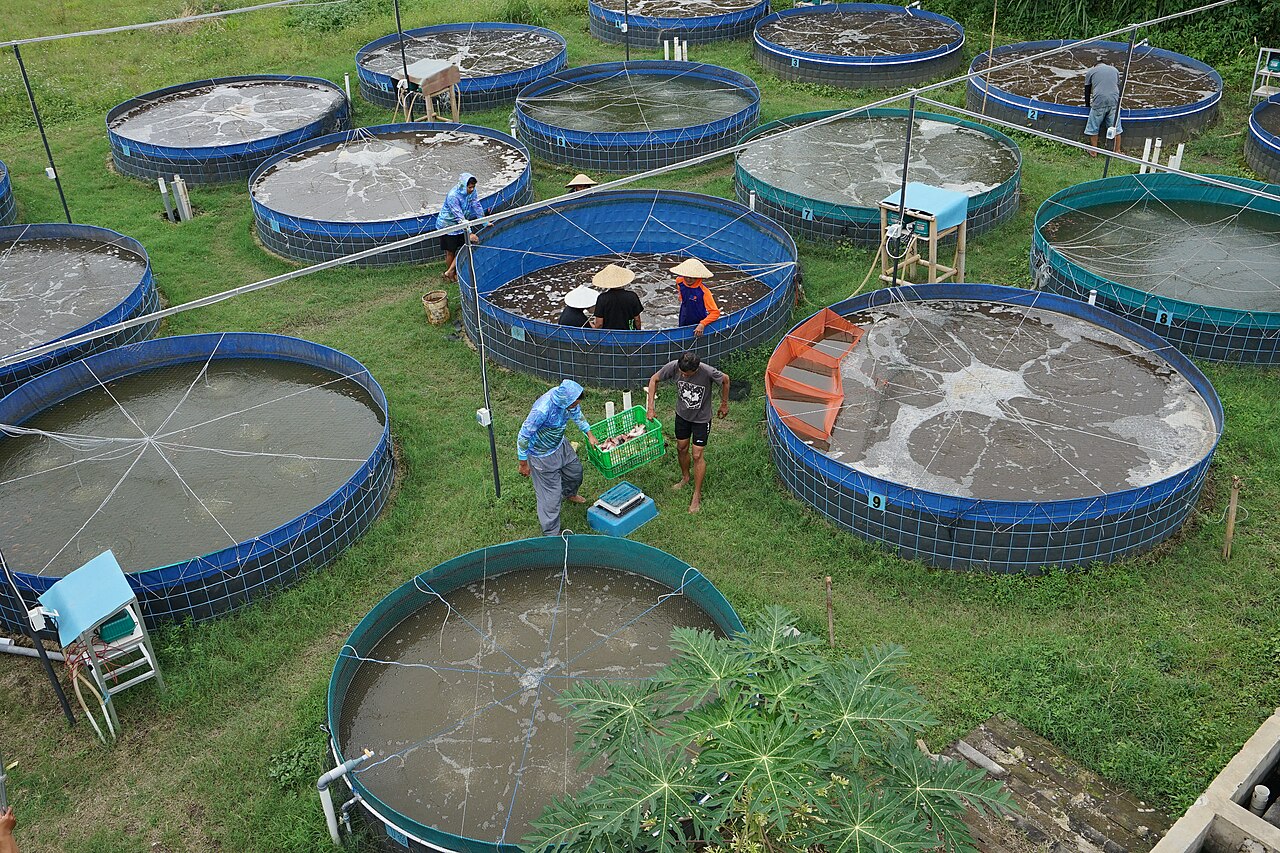
A farmer harvesting tilapia from a row of round tarpaulin biofloc ponds
Tilapia harvest from a biofloc pond. One site can hold a dozen or more round tanks at once on a small plot. Photo: M Joko Apriyo Putro, CC BY-SA 4.0, via Wikimedia Commons. Illustrative photo, not a Cirebon Smart Farm facility.

How Biofloc Works: The Nitrogen Cycle Inside the Pond

The carbon to nitrogen ratio is the key you have to hold every day

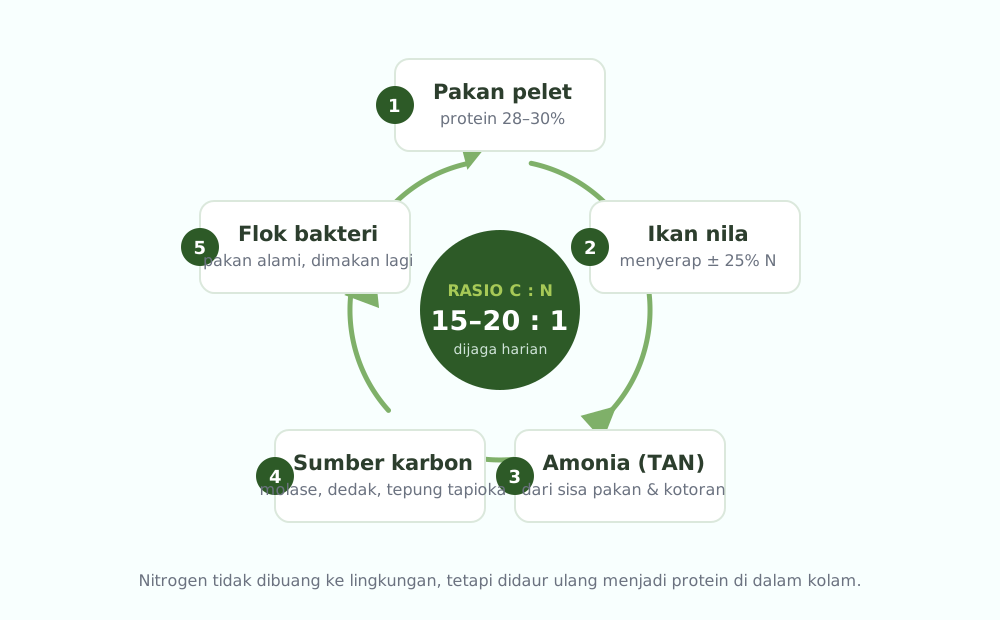
Biofloc nitrogen cycle diagram: feed, tilapia, ammonia, carbon source, bacterial floc, back to feed
The closed biofloc cycle. Nitrogen is not discarded but recycled into protein inside the pond.Swipe the image sideways to see the detail.
  1. Feed goes into the pond

    The fish are fed floating pellets with 28 to 30 percent protein. Only about a quarter of the nitrogen in the feed actually becomes fish flesh.

  2. Ammonia forms

    Leftover feed and waste release total ammonia, or TAN. In an ordinary pond this compound builds up and poisons the fish, so the water has to be changed often.

  3. Carbon source is added

    Molasses, fine rice bran, or tapioca flour goes in to raise the carbon to nitrogen ratio to around 15 to 20 to 1. This is the main trigger.

  4. Heterotrophic bacteria multiply

    With enough carbon and a constant oxygen supply, the bacteria take up the ammonia and build it into single cell protein, then clump together into floc.

  5. The fish eat the floc

    Tilapia are good floc feeders. Part of their protein need is met by the floc, so pellet use drops and the water stays livable.

One Thing That Is Not Negotiable

Aeration has to run a full 24 hours. If the oxygen supply stops, the floc settles and rots within hours, and then the fish die en masse. That is why a generator or backup power source counts as required equipment, not an accessory.

Anatomy of a Biofloc Pond

The parts that make up one pond ready to run

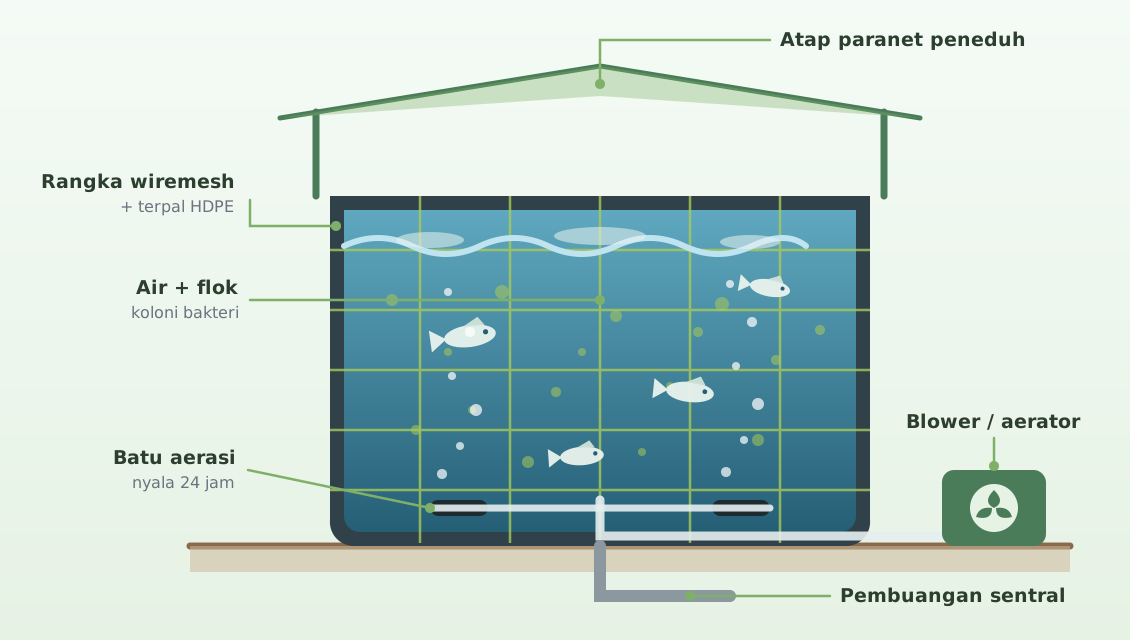
Cross section of a biofloc pond: wiremesh frame, tarpaulin, floc-laden water, air stones, blower, central drain, and shade net roof
Cross section of one round biofloc pond with its air lines and drain.Swipe the image sideways to see the detail.

Calculate Your Own Pond

Enter your pond diameter and water height into our biofloc pond calculator , and the water volume, fingerling count, feed requirement, and harvest estimate are worked out immediately. Free and no registration needed.

Technical reference for one biofloc pond for tilapia
Parameter General Reference Note
Pond diameter 2 - 3 meters Round shape so the sludge collects in the center
Pond height 1.0 - 1.2 meters Water filled to 80 - 90 centimeters
Effective water volume 5.6 - 6.4 cubic meters For a 3 meter diameter pond
Tilapia stocking density 100 - 150 fish per cubic meter A conventional pond holds only 10 - 20 fish
Dissolved oxygen above 4 mg per liter Measured in the morning, when levels are lowest
Acidity (pH) 7.0 - 8.0 Drifts down slowly as the floc ages
Water temperature 27 - 30 degrees Celsius The Cirebon climate suits this well
Floc volume 10 - 30 milliliters per liter Measured with an Imhoff cone after settling for 20 minutes
C:N ratio 15 - 20 to 1 Held by adding molasses daily
Aeration points 4 - 8 points per pond Air stones spread evenly across the bottom

The figures in the table above are the general reference values commonly used by biofloc farmers in Indonesia. The exact numbers always depend on fingerling quality, feed type, and the daily temperature at each site.

Biofloc Pond Equipment

The equipment list we prepare for one production unit

Round Tarpaulin Pond

A wiremesh frame lined with HDPE or orchid tarpaulin. The round shape centers the current, so the sludge is easy to siphon from the middle.

Diameter 2 - 3 m, height 1.0 - 1.2 m

Air Blower

A ring blower for several ponds at once, or a hi-blow for a small scale. This is the heart of the biofloc system and must never stop.

Runs 24 hours nonstop

Air Stones & Tubing

Air stones are spread across the pond bottom and connected to the main distribution pipe. Fine bubbles keep the floc suspended.

4 - 8 points per pond

Backup Power

A generator or UPS that takes over automatically when the power goes out. Without it, one long outage can wipe out everything in the pond.

Required, not optional

Water Quality Meters

A DO meter for dissolved oxygen, a pH meter, a thermometer, and an ammonia test. Measurements are taken every morning and afternoon.

DO, pH, temperature, ammonia

Imhoff Cone

A cone-shaped measuring glass for reading floc volume. Pond water is left to stand for 20 minutes, then the settled layer is read in milliliters per liter.

Target 10 - 30 ml per liter

Carbon Source & Probiotics

Molasses, fine rice bran, or tapioca flour as fuel for the bacteria, plus probiotics to speed up floc formation in the early stage.

Dosed to the C:N ratio

Floating Pellet Feed

Pellet size is matched to the mouth of the fish and stepped up as they grow. Floating pellets make appetite easy to watch.

28 - 31 percent protein

Central Drain Pipe

A pipe at the lowest point of the pond for siphoning excess sludge and for draining fast at harvest.

Fitted with a harvest valve

Shade Net Roof

Shade to blunt midday temperature spikes and keep rain from suddenly diluting the floc.

60 - 70 percent density

Sampling & Grading Tools

A scoop net, grading buckets, and a digital scale to check average body weight and even out fish size.

Sampling every 10 - 14 days

Connected Monitoring

Temperature and oxygen sensors feeding the same control panel as our hydroponic greenhouse, with early warnings.

Integrated with the greenhouse
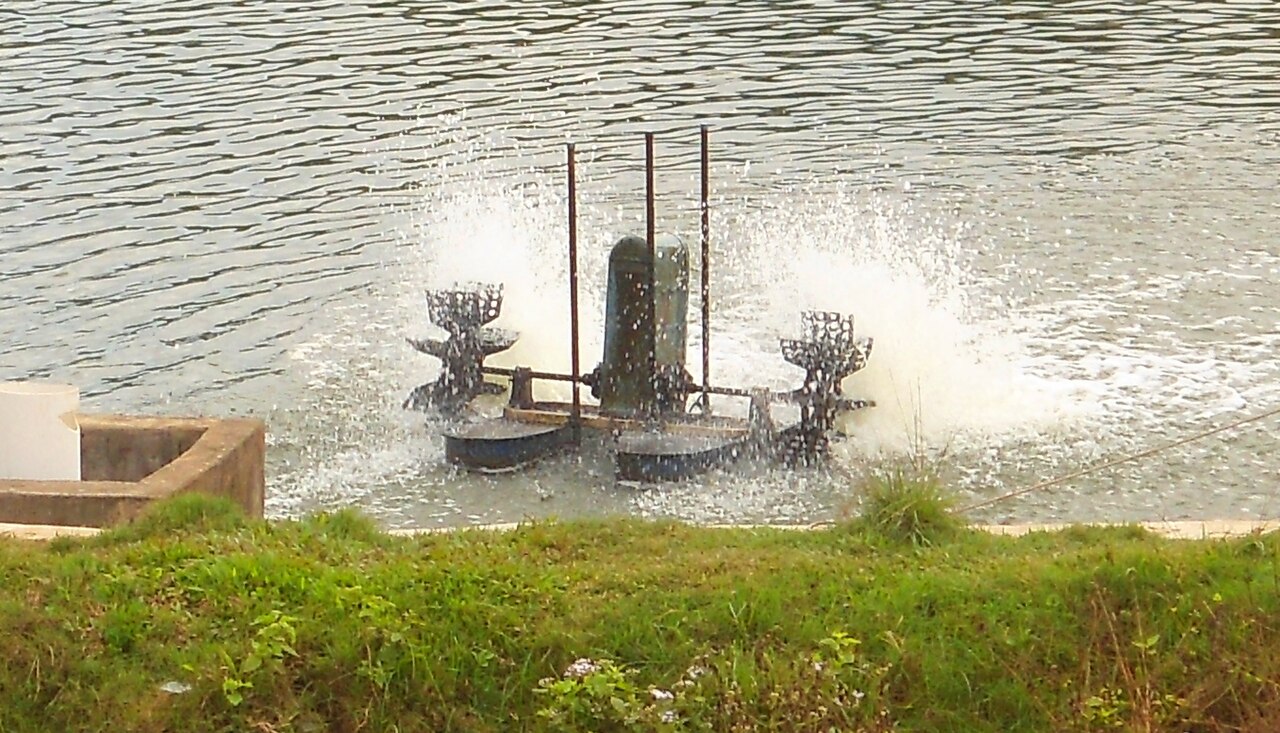
An aerator working in a fish pond, stirring the water surface
Aeration is the heart of the biofloc system. Oxygen must be supplied without a break so the floc stays suspended and does not rot on the bottom. Photo: Anna Frodesiak, CC0, via Wikimedia Commons.
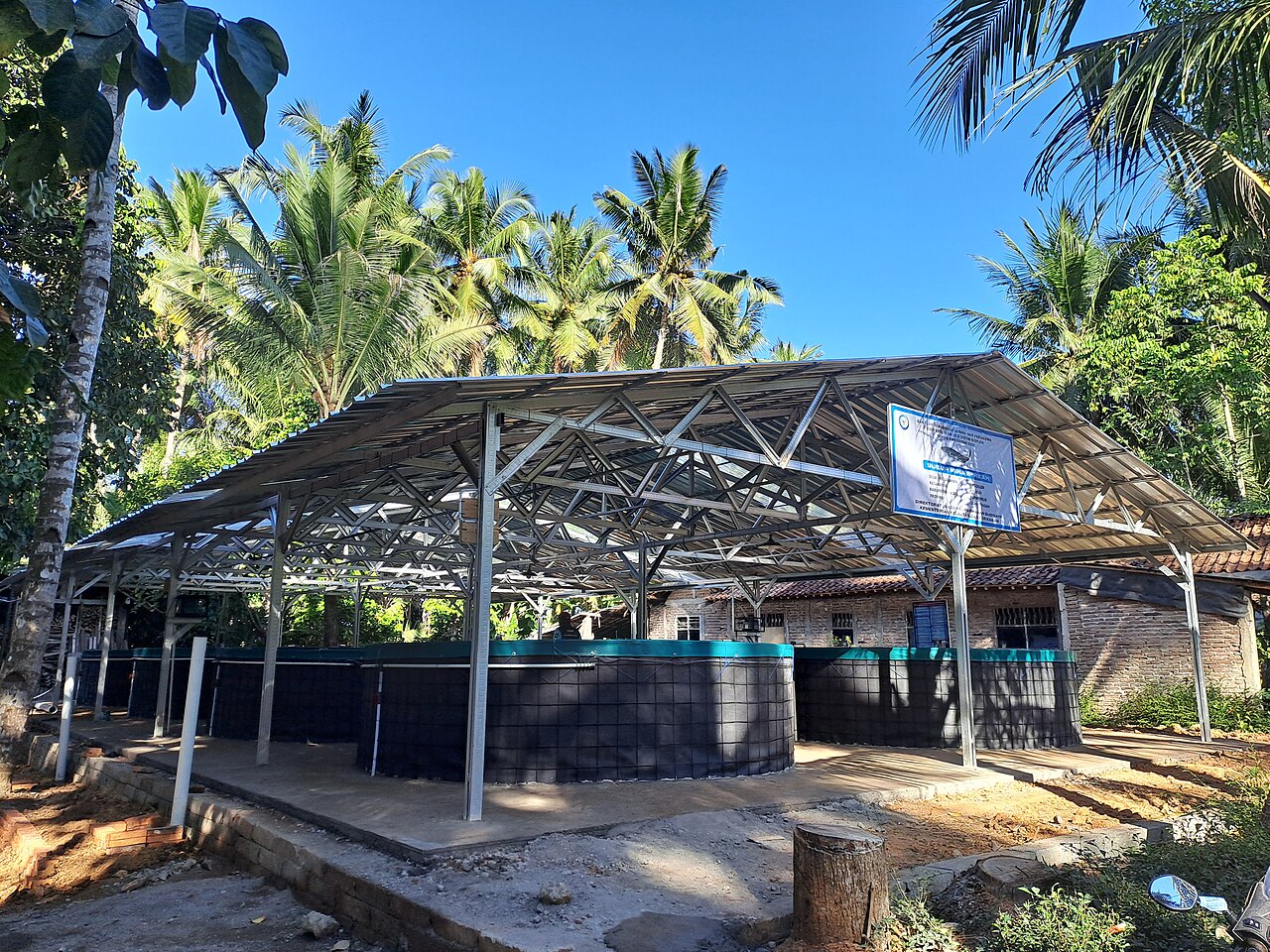
A round tarpaulin biofloc pond setup under a light steel roof
A roofed biofloc pond setup. The shade keeps water temperature steady and protects the floc from heavy rain. Photo: Anjas Imaji, CC BY 4.0, via Wikimedia Commons. Illustrative photo, not a Cirebon Smart Farm facility.

Tilapia, Our Main Species

One species first, mastered properly, before adding others

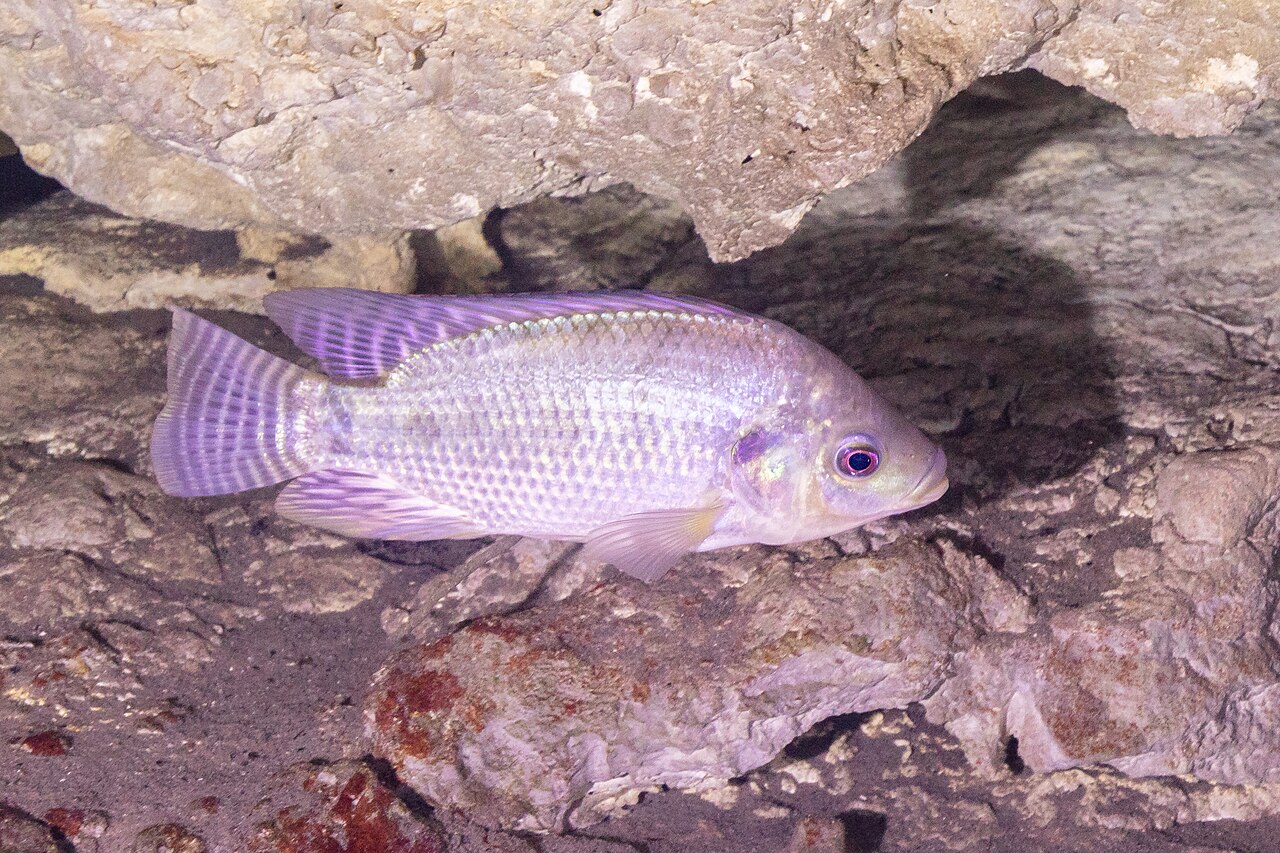
Tilapia Oreochromis niloticus swimming in clear water
Tilapia, Oreochromis niloticus. Tolerates high stocking density and eats floc directly. Photo: Diego Delso, CC BY-SA 4.0, via Wikimedia Commons.

Why We Chose Tilapia

Tilapia is the freshwater fish most ready for biofloc conditions. It tolerates high density, forgives swings in water quality, and most important, it really does eat the floc, so the benefit of the system shows up directly in feed cost.

  • An efficient floc feeder. Its gill filter structure is suited to harvesting floc particles from the water.
  • Fast growth. Reaches a market weight of 250 to 350 grams in four to six months.
  • Steady market. Demand from restaurants, wet markets, and caterers in the Cirebon area runs all year.
  • Clean flesh. Tarpaulin ponds and constant circulation hold down the off-flavor common in earthen ponds.
  • Fingerlings are easy to get. Available from hatcheries in West Java with traceable quality.

Plans for More Species

Once the tilapia line runs steadily, the same pond system can be used for other freshwater species. Here is what we are considering.

Aeration in a round tarpaulin pond, the same pond type used for biofloc catfish

Catfish

Clarias sp.

The most widely farmed biofloc fish in Indonesia. Catfish tolerate a stocking density of 200 to 400 fish per cubic meter, two to three times tilapia, because they can take air straight from the surface through their arborescent organ. The cycle is short, about 60 to 75 days to market size.
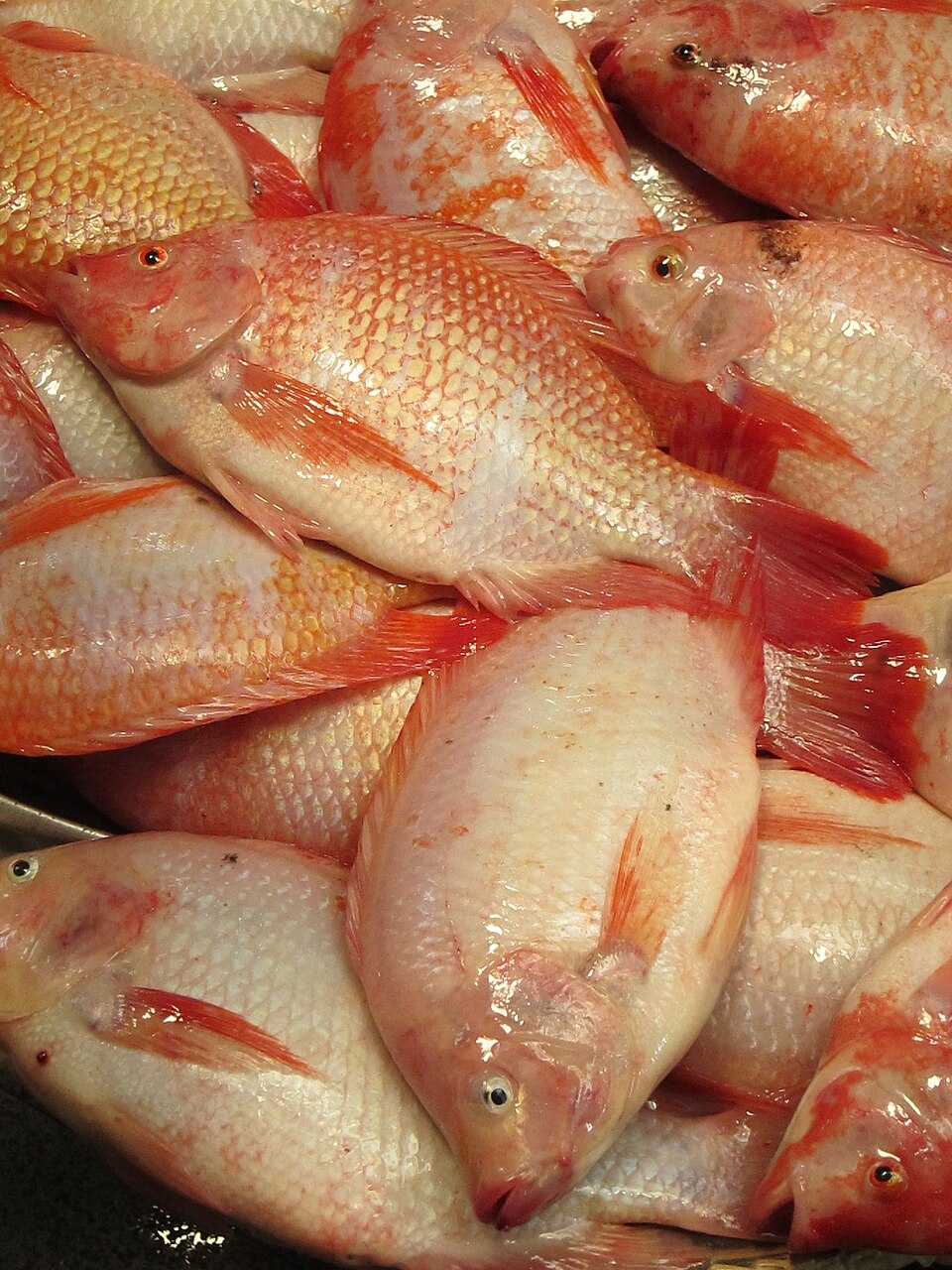
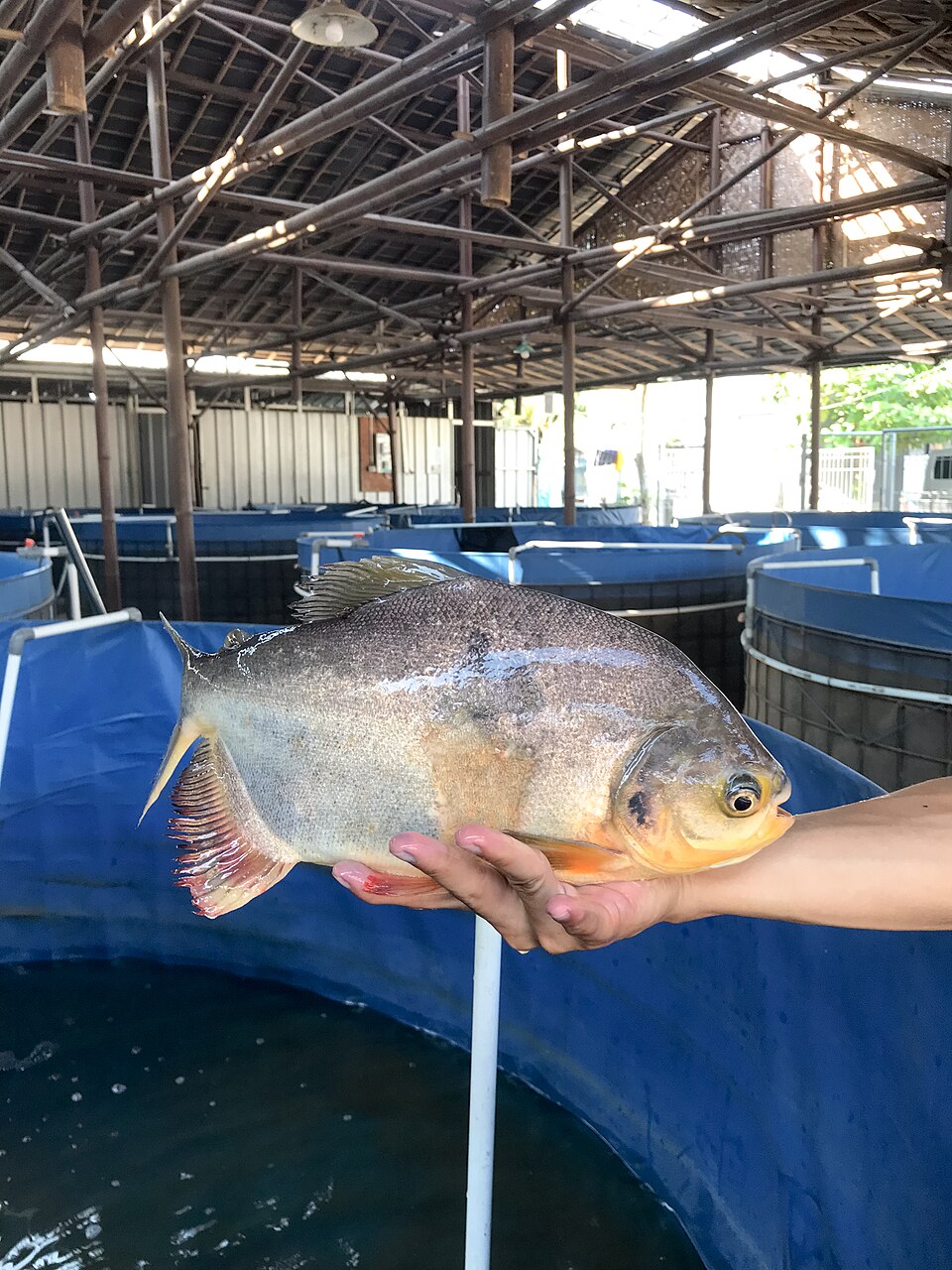
Fresh harvested red tilapia ready for market

Red Tilapia

Oreochromis sp.

A color variant restaurants prefer because it looks good served whole. Care is the same as for black tilapia.

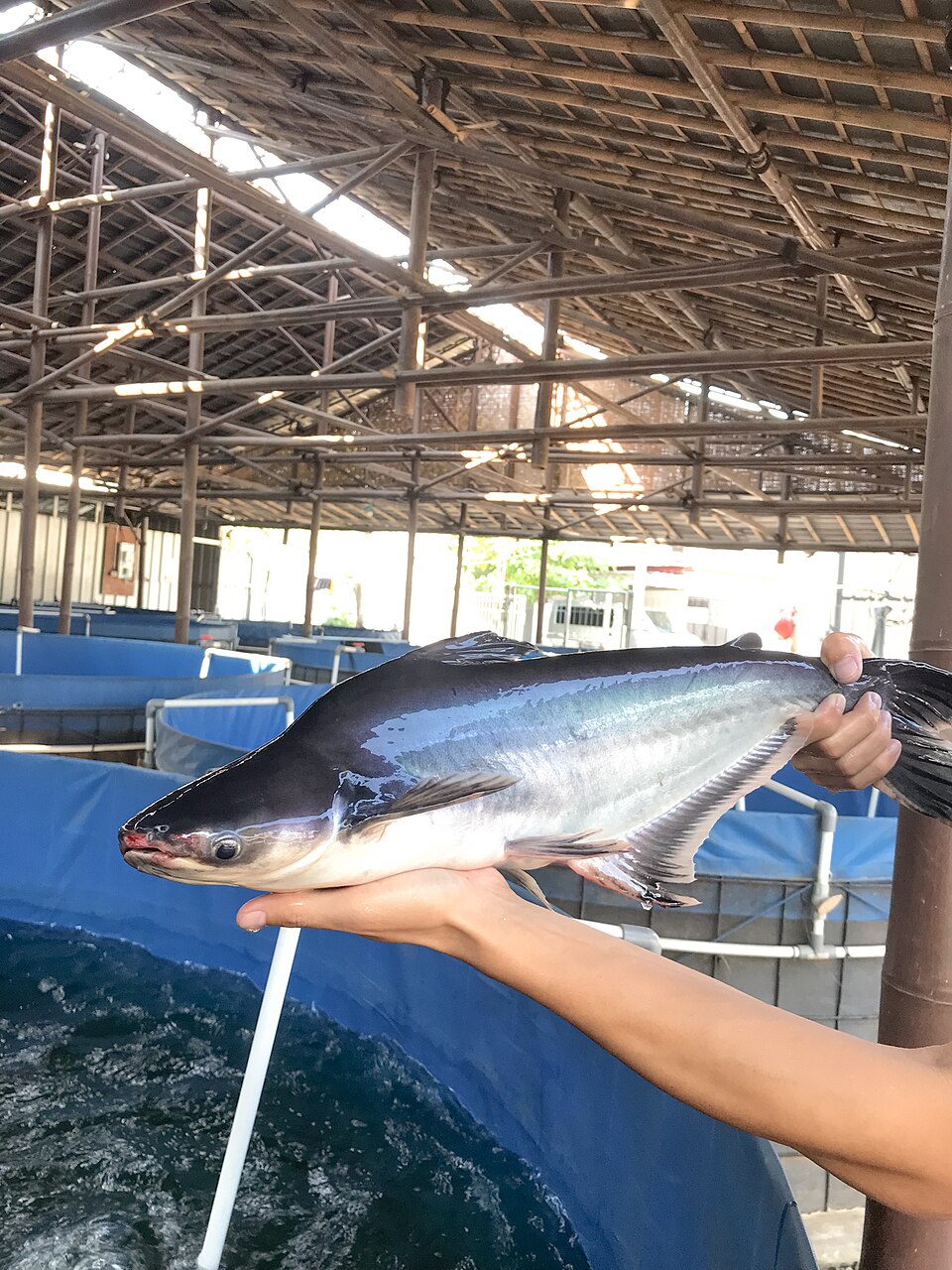
Pangasius raised in a biofloc pond

Pangasius

Pangasius sp.

Tolerates very high density and grows large. Suited to the fillet and processing market, with a longer harvest cycle.

Tambaqui raised in a biofloc system

Tambaqui

Colossoma macropomum

Tough, greedy, and fast growing. Often used as a companion species because it is fairly easy to care for.

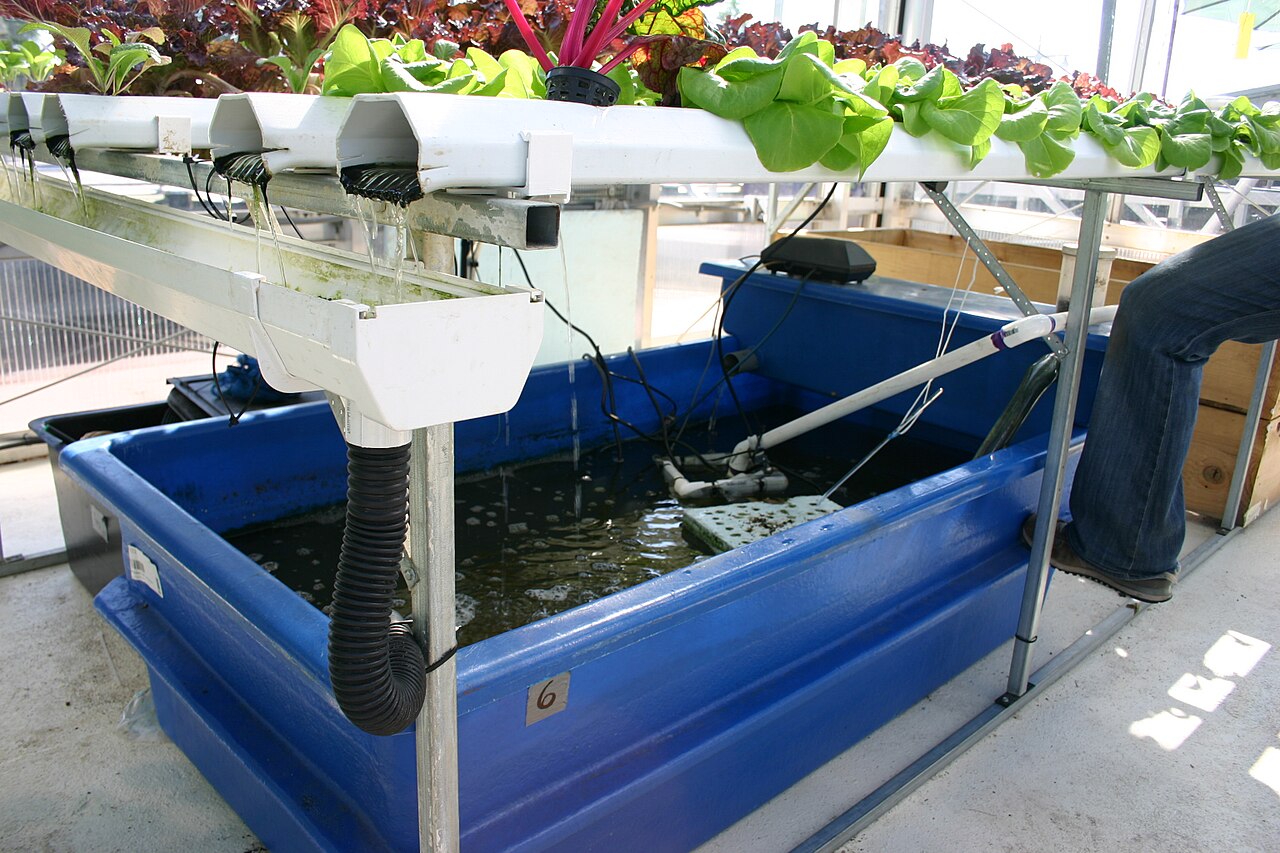
An aquaponics system with a fish tank below and hydroponic lettuce above it

Aquaponics Package

fish + vegetables in one flow

Combines the biofloc pond with our hydroponic growing channels, so one drop of water produces two products at once.

Biofloc Pond Sizes and How Many Fingerlings Fit

Round tarpaulin ponds are sold in standard sizes; here is the capacity of each

Round tarpaulin ponds in Indonesia are sold by a diameter code. D3 means three meters across, not three cubic meters. What sets the capacity is not the diameter but the water volume, and the water volume is always smaller than the frame volume because a pond is never filled to the rim.

Volume is worked out from the circle formula, using the water heights commonly used. Fingerling counts use 100 to 150 fish per cubic meter for tilapia and 200 to 400 fish per cubic meter for catfish, provided aeration runs a full 24 hours.
Code Diameter Water height Water volume Tilapia fingerlings Catfish fingerlings
D1 1 m 0.8 m 600 liters 60 - 90 fish 125 - 250 fish
D2 2 m 0.8 m 2,500 liters 250 - 375 fish 500 - 1,000 fish
D3 3 m 1.0 m 7,000 liters 700 - 1,060 fish 1,400 - 2,800 fish
D4 4 m 1.0 m 12,500 liters 1,250 - 1,880 fish 2,500 - 5,000 fish

Calculate Your Own Pond

If your pond size is not in the table, or you want to know the feed and molasses requirement and the harvest estimate, our biofloc pond calculator works it all out from the diameter and water height you enter. Free and no sign-up.

The Most Common Problems in Biofloc Ponds

Field symptoms, their causes, and what to do

Pond water foams and the foam does not break

Fine foam that lasts a long time means dissolved protein is building up, usually from overfeeding or floc that has aged too far. Cut the feed for one to two days, add a little carbon source, and drain the sludge through the central pipe. Coarse foam that breaks straight away is only an effect of aeration and is harmless.

Water turns deep green

Deep green means algae have taken over, usually because the pond gets too much direct sun. Healthy biofloc is milky brown to light greenish. Put up a shade net, and hold the C:N ratio at 15 to 20 to 1 so the heterotrophic bacteria outcompete the algae.

Fish hang at the surface in the morning

Dissolved oxygen falls to its lowest just before dawn, when bacteria and fish are both breathing with no photosynthesis to help. If the fish gather at the surface, your aeration is not enough. Add air stone points, and make sure the blower never stops.

Floc too dense, above 50 ml per liter

Measure with an Imhoff cone and let it settle for 20 minutes. Healthy floc volume is 20 to 40 ml per liter. If it goes past that, drain some of the bottom water through the central pipe and replace it with enough clean water. Removing excess floc is far safer than letting it load the oxygen.

Fish have an off-flavor at harvest

The off-flavor comes from geosmin produced by cyanobacteria, not from waste. Purge the fish in clean aerated water for one to three days before selling. This removes almost all of the smell.

How to Build a Biofloc Pond from Scratch

The order of work we follow before the first fingerlings go in

  1. Pond Assembly and Air Setup

    The wiremesh frame is set up on a level base, the tarpaulin is fitted, then the air pipe and air stones are laid out evenly on the pond floor. The pond is soak-tested to make sure there are no leaks.

  2. Initial Bacterial Culture

    The pond is filled, then probiotics, carbon source, and coarse salt are added. Aeration runs at full for seven to ten days until floc starts to form.

  3. Water Readiness Check

    Before the fingerlings go in, pH, temperature, dissolved oxygen, and floc volume are measured. The water is only called ready when every parameter is within the reference range and holds steady for two days in a row.

  4. Stocking the Fingerlings

    Fingerlings of 5 to 7 centimeters are acclimated by floating the transport bag in the pond, then released in the morning or late afternoon when the temperature is not extreme.

  5. Daily Care

    Feed is given two to three times a day, molasses is added at the set dose, and water parameters are recorded every morning. Excess sludge is siphoned from the central drain.

  6. Sampling and Grading

    Every ten to fourteen days, a number of fish are weighed to work out the average body weight and adjust the feed ration. Fish that are out of size are separated.

  7. Harvest and Handling

    The fish are purged for one to two days in clean water so the flesh is clean, then harvested through the drain valve, graded, and packed with cold handling.

Biofloc Meets Hydroponics: Aquaponics

The part that makes this line add up for us, not just a new venture

Cirebon Smart Farm already has a greenhouse, hydroponic growing channels, automatic dosing, and a control panel. The biofloc pond fills the one side of that chain that has been missing, an organic nutrient source.

The waste water from siphoning the pond is rich in nitrate and phosphate. Instead of being thrown away, it is filtered and routed to the vegetable beds. The plants take up the nutrients, the water comes back clean, and the cycle repeats. One feed input produces two harvests: fish and vegetables.

  • Less fertilizer. Part of the nutrient need of the vegetables is met by the pond water.
  • Near-zero discharge. No waste water is released into public drains.
  • One control panel. Pond and greenhouse sensors are monitored from the same system.
  • Risk is spread. Two different products keep income from depending on one season.
Aquaponics system: the fish tank at the bottom feeds water to the hydroponic lettuce growing channels above it
Aquaponics combines a fish pond with hydroponic growing channels. The pond water feeds the vegetables, the vegetables clean the water. Photo: Ryan Somma, CC BY-SA 2.0, via Wikimedia Commons.

Price Estimate and Interest List

Provisional figures, to be fixed at the first harvest

Estimated price for table-size tilapia Rp 25,000 - Rp 35,000 / kg Estimated from West Java market prices at the time this page was written. This figure is not a formal offer because our fish line is not yet in production.

We are not taking orders or advance payment for fish. What we are opening is an interest list, so we can contact prospective buyers and partners first once the first harvest date is settled.

What Is Available Now

While the ponds are being readied, our hydroponic produce is already running and can be ordered today.

Questions About Biofloc

What prospective farmers and buyers ask most

What is the biofloc system?

Biofloc is a fish farming technique that uses heterotrophic bacteria to turn the nitrogen waste in the pond into clumps of microorganisms called floc. The floc is rich in protein and is eaten again by the fish, so the water does not need frequent changes and feed use drops.

Why did Cirebon Smart Farm choose tilapia?

Tilapia tolerate high density and swings in water quality, eat floc directly, grow fast, and market demand in West Java is steady all year. That combination makes tilapia the best fit as the first species in our fish line.

What is the tilapia stocking density in a biofloc pond?

In a biofloc system with aeration running 24 hours, tilapia stocking density is generally 100 to 150 fish per cubic meter of water. That is far above a conventional pond, which usually holds only 10 to 20 fish per cubic meter.

Does biofloc pond water need routine changes?

No. As long as the floc is under control, water is only topped up to replace what evaporates and what is lost when the sludge is siphoned. This is why biofloc can cut water use by about 90 percent compared with a flow-through pond.

What is the minimum equipment to start a biofloc pond?

The core equipment is a round tarpaulin pond on a wiremesh frame, a blower and air stones running 24 hours, a central drain pipe, water quality meters such as a pH meter and a DO meter, an Imhoff cone to measure floc volume, and a carbon source such as molasses. Backup power is required because aeration must not stop.

How long until biofloc tilapia are ready to harvest?

From fingerlings of 5 to 7 centimeters, tilapia generally reach a market weight of 250 to 350 grams in four to six months, depending on water temperature, feed quality, and floc stability.

Do biofloc fish have an off-flavor?

The off-flavor comes from geosmin produced by algae on the bottom of earthen ponds. Biofloc ponds use tarpaulin and constant circulation, so the sludge is lifted and the flesh tends to be cleaner. For the best result, the fish are still purged for one to two days in clean water before harvest.

Can a biofloc catfish pond run without an aerator?

No, not if you mean real biofloc. Floc is a colony of living bacteria that breathe, and they, not the fish, are the biggest oxygen users in the pond. Once aeration stops, the oxygen is gone within hours, the floc dies and settles, and ammonia spikes.

What people often call catfish without an aerator is really an ordinary high stocking density pond that relies on the ability of catfish to take air from the surface. That can work, but the stocking density has to be far lower, the water needs routine changes, and there is no floc to be eaten again. If the power where you are cuts out often, prepare a battery-powered backup blower before you stock the fingerlings, not after.

What is the catfish stocking density in a biofloc pond?

Biofloc catfish are generally stocked at 200 to 400 fish per cubic meter of water, two to three times tilapia. Catfish can take that many because they have an arborescent organ that lets them take air straight from the surface, so they hold up better when dissolved oxygen drops.

For a D3 pond with one meter of water, the volume is about 7 cubic meters, so it fits 1,400 to 2,800 fish. Beginners should start at the lower end. High stocking density demands aeration, feed, and measuring discipline that are just as high, and a failure at high density runs its course far faster.

How do you build a biofloc catfish pond from scratch?

The order is the same as for tilapia. Set up the round tarpaulin pond on its wiremesh frame on level, compacted ground, fit the central drain pipe at the lowest point, then assemble the blower with air stones running 24 hours. Fill with water and let it stand for two to three days so the chlorine gases off.

After that, culture the bacteria first, do not stock the fingerlings straight away. Add probiotics, molasses, and a little feed, and leave it for seven to ten days until the water is milky brown and the floc volume reads 20 to 40 ml per liter in the Imhoff cone. Only then stock catfish fingerlings of 5 to 7 centimeters, and hold the C:N ratio at 15 to 20 to 1 by adding molasses every time you add feed.

What does good biofloc pond water color look like?

Milky brown to light greenish brown, cloudy but not thick, and with no foul smell. That color comes from the colony of heterotrophic bacteria at work turning ammonia into floc protein.

Deep green means algae have taken over, usually because the pond is too exposed to the sun. Very dark brown with a sharp smell means the floc is too old and the sludge has built up. Clear water is not a good sign in biofloc, because it means no floc has formed at all. Color is only a first guess; the decision still comes from the Imhoff cone and the meters.

Why does biofloc pond water foam?

First tell the types of foam apart. Coarse foam with big bubbles that breaks straight away is only an effect of aeration and is harmless. What to watch for is fine white or brownish foam that piles up thick and lasts a long time.

That kind of foam means dissolved protein is building up, usually from overfeeding or from floc that has aged too far and started to break down. Cut the feed for one to two days, siphon the sludge through the central pipe, and add a little carbon source so the bacteria take up the excess nitrogen again. Check the floc volume too, because thick foam almost always comes with floc that has passed 50 ml per liter.

When will Cirebon Smart Farm biofloc tilapia be available?

Our biofloc fish line is still in preparation and we are not selling fish yet. Please leave a message through the contact page so we can let you know first when the first harvest schedule and the official prices are announced.

Photo Credits

The illustrative photos on this page are openly licensed and are not documentation of our own facility

Want to Talk About Biofloc?

Whether you are a prospective fish buyer, a prospective partner, or a farmer who wants to build your own pond, we are glad to share our field notes.