Prevention Is Far Cheaper than Treatment
Most outbreaks come in through the door, not through the air
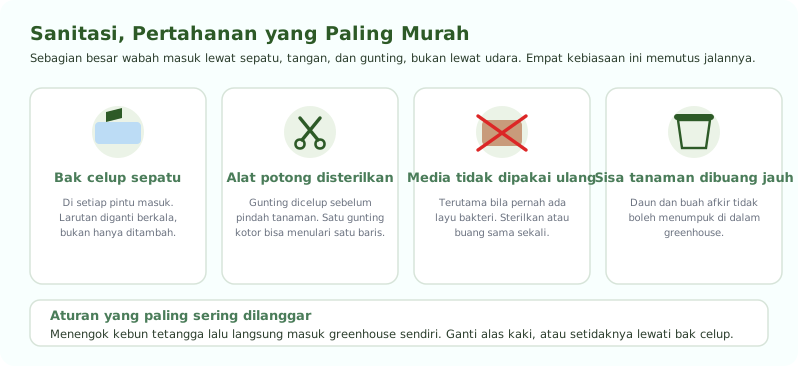
In a greenhouse, disease rarely arrives on its own. It is carried in by shoes, hands, shears, used growing media, or seedlings that were already sick back in the nursery. So the first line of defense is not pesticide, it is habit.
The second is your eyes. Checking the plants every day means you find an attack while it is still a few leaves, not after half a row is infected.
Recognizing Pests from the Marks They Leave
What you see first is usually the damage, not the pest

| Pest | Plants attacked | Damage signs | Action |
|---|---|---|---|
| Armyworm | Leafy greens | Large ragged holes, often attacks at night | Pick them off by hand in the afternoon, remove damaged leaves |
| Diamondback moth | Mustard greens, pak choi, kale | Leaves holed like windows, only the veins left | Set traps, remove badly damaged leaves |
| Aphids | Almost all plants | Curled leaves, sticky honeydew and ants gathering | Spray with pressurized water, remove badly infested tips |
| Leaf miner | Eggplant, cherry tomato | Winding white trails inside the leaf blade | Remove mined leaves, do not leave them on the floor |
| Thrips and spider mites | Bell pepper, chili, eggplant | Silvery patches, thickened leaves, rough netted fruit skin | Raise the humidity, spray if the attack spreads |
| Whitefly | Tomato, eggplant, cucumber | Yellowing leaves, black sooty mold, carries leaf curl virus | Set yellow traps, destroy virus-infected plants |
Deciding the Level of Response
Not every attack needs spraying
-
Light attack, just remove the damaged parts
A few holed leaves or a handful of aphids on the tips can still be handled by hand. Remove the damaged leaves and carry them out of the greenhouse, do not drop them on the floor.
-
Attack spreading, spray before pulling
If the attack has already spread past several plants, spray first and only then pull the worst plants. Pulling first sends the pests flying onto the healthy plants around them.
-
Heavy attack, destroy and replant
If a block is beyond saving, pull everything, spray what is left, sterilize the bed and its growing media, then replant. Keeping sick plants alive only prolongs the source of infection.
-
Replant as soon as possible
A bed left empty too long becomes a place where weeds and pests hold on. Once it is sterilized, fill it again right away.
One important rule for plants whose flowers are also harvested or eaten: do not spray pesticide on the part that will be consumed. For fruiting plants, stop spraying at the safe interval before harvest given on the package.
Telling Diseases Apart
A wrong guess means the wrong treatment
Fusarium wilt or bacterial wilt, test it with a glass of water
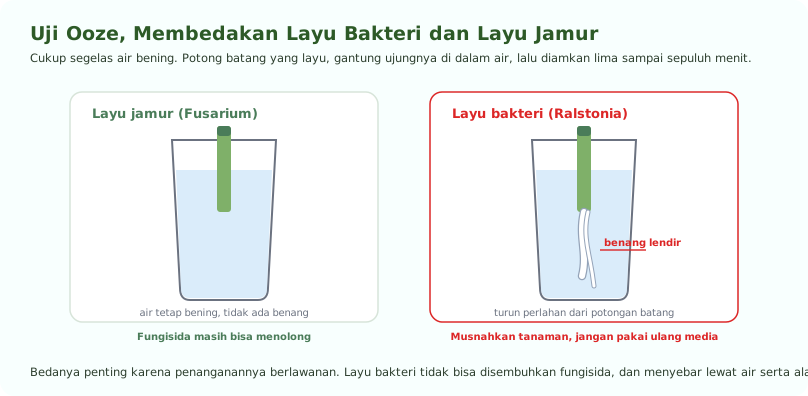
Cut the stem of the wilting plant, hang the cut end inside a glass of clear water, then leave it for five to ten minutes. If a cloudy thread of ooze appears and sinks slowly from the cut, that is bacterial wilt. If the water stays clear, it is most likely a fungal wilt such as Fusarium.
The difference is decisive, because the treatments are opposite. Fusarium wilt can still be held back with fungicide and better drainage. Bacterial wilt cannot be cured at all. The plant has to be destroyed, its growing media must not be reused, and every cutting tool that touched it has to be sterilized.
Other diseases that show up often
| Disease | Symptoms | Main cause | Action |
|---|---|---|---|
| Downy mildew on basil | Yellow patches on top of the leaf, a grayish layer underneath | High humidity and still air | Open the windows, space the plants out, remove the worst |
| Leaf spot on lettuce | Round brownish spots with darker edges | Leaves wet too long | Keep the leaves dry, improve the air flow |
| Blossom end rot on bell pepper and tomato | The fruit tip turns black and hard | Calcium not transported, not a fertilizer shortage | Keep EC from running high, water supply steady, air moving |
| Yellow leaf curl virus | Young leaves curl and yellow, the plant stays stunted | Spread by whitefly | Destroy the plant, control whitefly, there is no cure |
Questions About This Module
What participants ask most often
How do I tell a fungal wilt from a bacterial wilt?
Do the ooze test. Cut the wilting stem, hang the end inside a glass of clear water, then leave it for five to ten minutes. If a cloudy thread of ooze appears and sinks slowly from the cut stem, that is bacterial wilt. If the water stays clear, it is most likely Fusarium wilt.
The difference matters because the treatments are opposite. Fusarium wilt can still be held back with fungicide and better drainage, while bacterial wilt cannot be cured. The plant has to be destroyed and its growing media must not be reused.
Why are the tips of my bell peppers and tomatoes turning black?
That is blossom end rot, and the cause is calcium not reaching the fruit tip. Almost always there is already enough calcium in the solution; the problem is the transport.
The three most common triggers are EC that is too high in the root zone, a water supply that goes up and down, and air so humid that the plant stops transpiring. Fix all three. Adding calcium fertilizer without that will not help.
What are the signs of thrips and spider mites on fruiting plants?
Silvery patches on the leaves, leaves that thicken and curl, and fruit skin that turns rough and netted. Both are very small and usually only noticed once the damage shows.
Check the underside of the leaves and inside the flowers regularly. Humidity that is too low favors spider mites, so keeping humidity reasonable already holds their numbers down.
Can used growing media be reused?
Yes, as long as the previous plants were healthy and the media is sterilized first by soaking it and then rinsing it clean.
But if your farm has ever had bacterial wilt or another soil-borne disease, the used media has to be thrown out, not sterilized. The risk of losing one growing cycle costs far more than new media.
Why are my tomato leaves curling and yellowing?
If the curling leaves are the young ones and the plant is stunted as well, it is most likely yellow leaf curl virus spread by whitefly. There is no cure. The plant has to be destroyed so it does not become a source of infection.
If the leaves roll but stay green and the plant grows normally, that is usually a reaction to high temperature or too much pruning, and it is harmless.
All the modules can be read in order or skipped through as needed. See the hydroponics training list, or all training tracks.