Four Ways Nutrients Reach the Roots
The ingredients are the same, only the way they are delivered differs
Every hydroponic system gives the plant the same three things: water, dissolved nutrient elements, and oxygen at the root zone. What separates the four systems below is only how those three are delivered. Understanding that difference matters, because the most common beginner mistake is choosing a system that does not match the crop and the labor available.
One thing holds for all of them. Roots need oxygen as much as they need fertilizer. A system that keeps roots submerged all the time without aeration will fail, however advanced the equipment is.
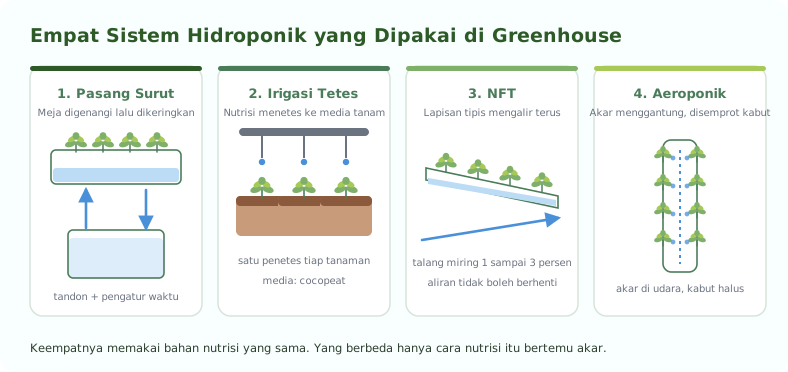
System 1: Ebb and Flow
Ebb and flow, or flood and drain
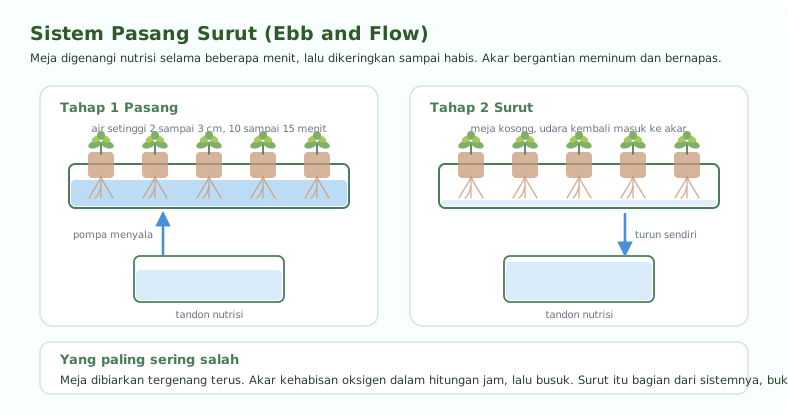
The growing table is flooded with nutrient solution to a depth of two to three centimeters, held for ten to fifteen minutes, then allowed to drain back into the reservoir. It is during the draining that fresh air is pulled into the gaps in the media and the roots breathe.
This system is used most often on nursery tables, because watering comes out even and no seedling sits in too much water. For a small garden, it is also the easiest system to look after yourself.
Parts you must have
Pump and reservoir
A submersible pump rated for the lift height. Keep the reservoir covered so algae does not grow in it.
Timer
Sets how many times a day the table is flooded. Without one you have to watch the pump all day.
Flood table
A flat base with a drain hole at the lowest point, so the water empties out completely when it drains.
EC and pH meters
The solution is reused, so its concentration changes every day and has to be monitored.
Pros and cons
| Aspect | Notes |
|---|---|
| Nutrient uptake | Even, because all the media is wetted at once |
| Root rot risk | Low, as long as the drain stage really happens |
| Water use | Efficient, the solution returns to the reservoir and is used again |
| Up-front cost | Moderate, needs a watertight table and a timer |
| Weak point | Root disease spreads fast because the water is shared |
System 2: Drip Irrigation
Drip irrigation, the mainstay for fruiting crops
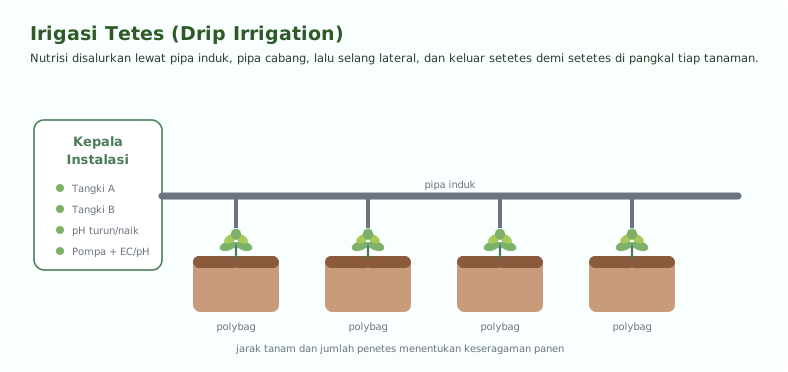
The solution runs from the main pipe into the branch pipes, then into the lateral hoses, and comes out drop by drop through an emitter at the base of each plant. Growing media such as cocopeat or rice husk holds that water briefly before the roots take it up.
This is the most common system for melon, tomato, chili, and bell pepper, because each plant can be given its own dose and the leaves stay dry. Dry leaves get fungal disease far less often.
System 3: NFT
Nutrient film technique, a thin flowing layer
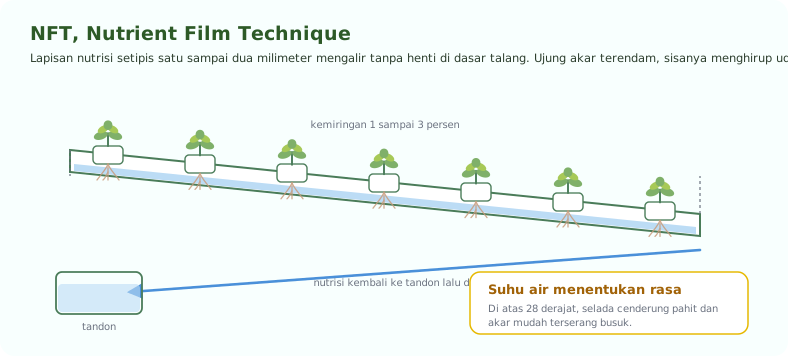
The solution flows thin, about one to two millimeters, along the bottom of a growing channel sloped one to three percent. Only the root tips sit in the solution, the rest are in humid air inside the growing channel.
NFT gives the fastest growth for leafy greens and needs almost no growing media. The consequence is that the flow must never stop. One hour of pump failure in the middle of the day is enough to wilt lettuce permanently.
System 4: Aeroponics
Hanging roots, nutrients as mist
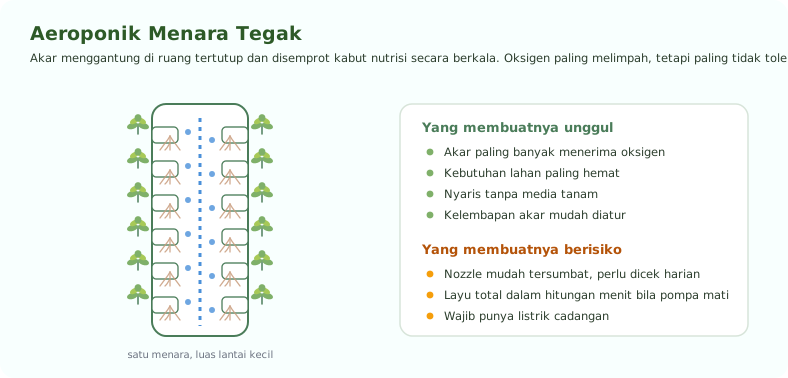
The roots hang in a closed chamber and are sprayed with a fine mist at intervals. Because the roots touch the air directly, the oxygen supply is the most abundant of all the systems, and growth is the fastest.
The form used most often in Indonesia is the vertical tower, because one tower holds dozens of planting holes on less than one square meter of floor space.
Choosing the Right System
Match it to the crop, the labor, and your power supply
| System | Best for | Attention needed | Power-outage tolerance |
|---|---|---|---|
| Ebb and flow | Nursery and leafy greens | Medium | Fairly tolerant, the media still holds water |
| Drip irrigation | Melon, tomato, chili, bell pepper | Medium | Tolerant, the media holds water for a few hours |
| NFT | Lettuce and fast-growing leafy greens | High | Vulnerable, wilts within hours |
| Aeroponics | Leafy greens in tight spaces | Very high | Very vulnerable, wilts within minutes |
If this is your first setup, start with drip irrigation or ebb and flow. Both forgive mistakes. NFT and aeroponics give faster results, but they demand power that never cuts out and eyes that check every day.
Whichever system you choose, the concentration of the solution is worked out the same way. AB Mix Calculator on this site works out the stock solution dose for your reservoir volume, and can also blend from single fertilizers.
Questions About This Module
What participants ask most often
Which hydroponic system suits a beginner best?
Drip irrigation and ebb and flow are the two that forgive mistakes most. Both use growing media that holds water, so the plants do not wilt right away when the power goes out or the pump stops for a while.
NFT and aeroponics give faster growth, but both demand a flow that must never stop. For a first setup, a failure that unfolds slowly is far easier to learn from than a failure that happens within minutes.
What is the difference between NFT and DFT?
NFT runs a nutrient film one to two millimeters thin, so most of the root is in humid air. DFT floods the growing channel much deeper, around four to six centimeters, and the roots are almost entirely submerged.
As a result, DFT tolerates a power cut better because the water stays in the growing channel, but its roots run short of oxygen more easily without extra aeration. NFT grows faster, provided the pump never stops.
Can hydroponics run without electricity?
It can, but only with a wick system or a floating raft, and the yield is far below a pump-driven system. A wick system relies on capillary action in flannel cloth, so the water supply is limited and is only enough for small leafy greens at household scale.
For every system covered in this module, electricity is required. If the power goes out often where you are, prepare a battery-powered backup pump before you sow the seed, not after.
How long should the pump run each day?
On an ebb and flow system, usually four to eight times a day, ten to fifteen minutes each, adjusted to the weather. Hot days call for more frequent cycles.
On NFT and aeroponics, the flow runs continuously during the day. Some growers rest it at night, but that is only safe if the night temperature really drops and the roots are already strong.
All the modules can be read in order or skipped through as needed. See the hydroponics training list, or all training tracks.