Harvest Starts Several Days Before the Fish Come Out
What you do in the last days sets the selling price
Many farmers treat harvest as a one-day job. But the two things that matter most for quality, purging and removing off-flavor, have to start long before the fish come out.
The exact same fish can sell as different quality just because of how they were handled in the last few days.
Purging
Emptying the gut before the fish are transported
Purging means fasting the fish before harvest. The point is not to save feed, it is to empty their gut.
Fish with a full stomach keep passing waste during transport. That waste turns into ammonia in the cramped transport water, and it is the ammonia that kills fish on the way. An empty stomach also lowers oxygen use.
| Purpose | Purging time | Note |
|---|---|---|
| Harvest and sell on site | 12 to 24 hours | Enough to empty the gut |
| Short-distance transport | 24 hours | Transport water stays cleaner |
| Long-distance transport | 24 to 36 hours | The longer the trip, the more it matters |
| Fingerling transport | 12 to 24 hours | Fingerlings are more fragile, do not overdo it |
Removing Off-Flavor
The problem that lowers the price most often, and the one most misunderstood
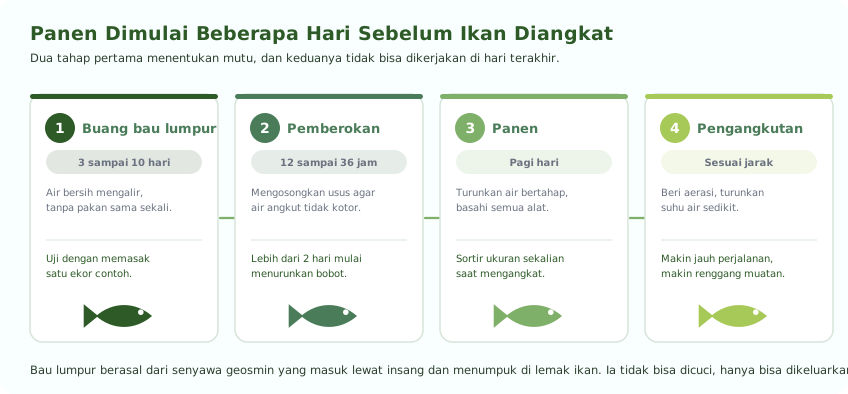
Off-flavor in freshwater fish does not come from dirt, and it cannot be washed off. It is caused by two compounds called geosmin and MIB, produced by cyanobacteria and actinomycetes in the water.
Both compounds enter through the gills, then build up in the fish's fat tissue because they are fat-soluble. Uptake is fast, only a few hours. Clearing them out is far slower, it takes days.
-
Move the fish into clean flowing water
The water has to be free of algae and organic matter. Moving them into water that smells just as bad will clear nothing.
-
Do not feed while the process runs
Besides emptying the gut, not feeding keeps the purging water clean so the off-flavor compounds are not taken up again.
-
Allow three to ten days
How long depends on the water temperature and how fatty the fish is. Cooler water slows it down, fatty fish hold it longer. In bad cases it can take more than ten days.
-
Test by cooking a sample, do not guess
This is the method the industry uses and there is no substitute for it. Take one fish, cook it without any seasoning, then taste it. If it still smells earthy, keep going. Your nose is more sensitive than any instrument you can afford.
-
Prevent it from the start by keeping algae down
Shading the pond, not overfeeding, and keeping the siphoning routine is far cheaper than purging for days at the end of the cycle.
Harvest and Transport
Whether the fish arrive alive is decided here
-
Harvest in the morning while it is still cool
Cool water holds more oxygen and the fish are calmer. Avoid the heat of midday completely.
-
Lower the pond water in stages, not all at once
A sudden drop makes the fish panic, injure each other, and lose their slime coat. Lower it slowly while herding the fish to one side.
-
Wet every tool before it touches the fish
Dry nets, buckets, and scales strip off the protective slime coat. Lost slime is the way in for fungus, and that shows up as white patches a few days later, in the buyer's hands.
-
Grade by size while you harvest
One size per container is easier to sell and buyers value it more. This is work that adds no cost at all.
-
Set transport density by distance and temperature
The longer the trip and the hotter the weather, the fewer fish per container. Give aeration or pure oxygen for trips longer than one hour.
-
Lower the transport water temperature a little
Cooler water slows the fish's breathing rate, so the oxygen lasts longer and less ammonia forms. Bring it down slowly, not with ice straight in.
Questions About This Module
What participants ask most often
How do you remove off-flavor in fish?
Move the fish into clean flowing water and give them no feed for three to ten days. Off-flavor comes from geosmin and MIB, compounds produced by cyanobacteria that enter through the gills and build up in the fish's fat tissue.
Because it sits inside the flesh, this smell cannot be removed by washing or by seasoning. The only way to test is to cook one sample fish without seasoning and taste it. If it still smells earthy, keep purging.
What is the purpose of purging fish before transport?
To empty the gut. Fish with a full stomach keep passing waste during the trip, that waste turns into ammonia in the cramped transport water, and it is the ammonia that kills the fish before they arrive.
An empty stomach also lowers oxygen use. Allow 12 to 24 hours for short distances and 24 to 36 hours for long ones. More than two days starts to cut weight and leaves the fish weak.
How long until catfish are ready to harvest?
Usually 60 to 90 days, from 5 to 7 centimeter fingerlings to table size, depending on stocking density, feed quality, water temperature, and how disciplined the grading is.
Tilapia takes longer, around four to six months to reach 250 to 350 grams. Routine grading shortens the time to harvest, because the small fish are not left behind by the big ones.
How do you transport live fish so they do not die on the way?
Purge them for 24 hours first, harvest in the morning, and bring the transport water temperature down a little, slowly, so the fish breathe slower. Set the density to match the distance: the farther and the hotter, the fewer fish per container.
For trips longer than one hour, provide aeration or pure oxygen. Wet every tool before it touches the fish, because a stripped protective slime coat turns into fungus a few days later, in the buyer's hands.
What should you record after harvest?
Three numbers. How many fish actually came out against how many were stocked, which gives you the survival rate. The total harvest weight. And the total feed used over the whole cycle.
From those three you get your real survival rate and FCR, and those two numbers are what tell you what needs fixing. Without a record, the next cycle will just repeat the same mistakes without you noticing.
All the modules can be read in order or skipped through as needed. See the fish farming training list, or all training tracks.