Check the Water First, Then Look for the Disease
Most outbreaks are a result, not a cause
The bacteria and parasites that cause disease are almost always in the pond the whole time. Healthy fish can hold them off. What lets them attack is a fish already stressed by low oxygen, high ammonia, swinging temperature, or rough handling.
That is why the order of checks is always the same. Measure oxygen, ammonia, nitrite, pH and temperature first. Only once all of them are normal does it make sense to look for a biological cause.
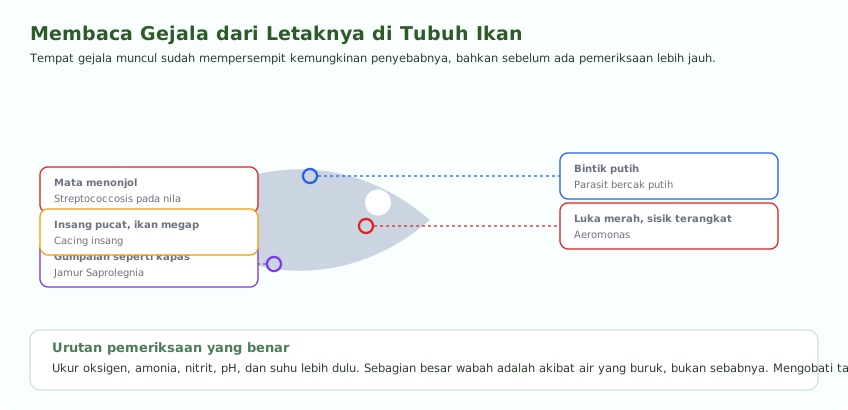
Recognizing the Most Common Diseases
Symptoms, causes, and what triggers them
| Disease | Visible symptoms | Cause | Most common trigger |
|---|---|---|---|
| White spot (ich) | White dots like grains of salt on the body and fins, fish rubbing themselves | Ichthyophthirius parasite | Sudden temperature drop, prolonged cold water |
| Aeromonas (red sores) | Red sores, raised scales, belly swollen with fluid | Aeromonas hydrophila bacteria | Injuries from grading, dirty water, stocking density too high |
| Streptococcosis in tilapia | Bulging eyes, swimming in circles, curved body | Streptococcus agalactiae bacteria | Water temperature above 30 degrees, high stocking density |
| Fungus (saprolegniasis) | White cotton-like tufts on wounds, fins, or eggs | Saprolegnia fungus | Open wounds, stripped slime coat, low temperature |
| Trichodina | Excess slime, dull body color, fish listless and rubbing themselves | Trichodina parasite | Organic matter building up, water rarely siphoned |
| Gill flukes | Pale or swollen gills, fish gasping even though oxygen is fine | Dactylogyrus and Gyrodactylus | High stocking density, fingerlings brought in from the hatchery |
| Fish louse (argulus) | Greenish brown specks that move, attached to the body | Argulus parasite | Water coming in from an open source without being filtered |
Treatment and Doses
Numbers to use carefully
| Substance | Dose | Method and duration | What it treats |
|---|---|---|---|
| Coarse salt | 5 to 10 grams per liter | Long bath in the quarantine pond | Slime coat recovery, stress relief, mild fungus |
| Coarse salt | About 30 grams per liter | Short bath of 10 to 30 minutes | External parasites, with the fish watched the whole time |
| Potassium permanganate | 5 to 10 grams per cubic meter | Bath of about 1 hour | Trichodina, white spot, other external parasites |
| Formalin | 10 to 15 milliliters per cubic meter | Bath of at least 4 hours with strong aeration | External protozoa and fungus |
| Shade and lower stocking density | Not a chemical | Sustainable | Streptococcosis in tilapia, the most effective prevention |
One practical guide for potassium permanganate: the right dose is the lowest one that still keeps the water pink for four to eight hours. If the color fades faster than that and you need more than 6 grams per cubic meter, it means there is too much organic matter in your pond. Fix the cleanliness first, because treating dirty water never works.
Always increase aeration during any treatment. Almost every substance above lowers dissolved oxygen, and sick fish are the least able to take that.
Biosecurity
Keeping disease out is far cheaper than treating it
Footbath at the entrance
Replace the solution on a schedule, do not just top it up. A solution that has gone cloudy no longer kills anything.
Quarantine new fingerlings
Hold new fingerlings one to two weeks in a separate container before combining them. Most disease is brought in from outside.
Work from healthy ponds to sick ponds
The daily order of work always starts with the healthiest pond. Never the other way around.
Filter the incoming water
Water from a river or an open channel carries wild fish, parasite eggs and lice. Settle and filter it first.
No tools shared between ponds
Nets and buckets are best kept per pond. If you have to share, dip and dry them between uses.
Remove dead fish every day
A carcass left in the pond becomes both a source of infection and a drain on oxygen. Dispose of it well away from the pond area.
Questions About This Module
What participants ask most often
Why do tilapia's eyes bulge out?
That is the telltale symptom of streptococcosis, a disease caused by the bacteria Streptococcus agalactiae. The other symptoms that come with it are fish swimming in circles, curved bodies, and deaths rising quickly.
The trigger is almost always water above 30 degrees together with high stocking density. Bring the temperature down with shade, reduce the density, separate the fish showing symptoms as fast as you can, and fix the water quality. It spreads very quickly, so how fast you separate them decides the outcome.
What causes fungal disease in catfish?
Fungus from the Saprolegnia group. The symptom is white cotton-like tufts stuck to wounds, fins, or eggs.
This fungus is really an ordinary decomposer that is always in the water. It only attacks fish whose skin is already injured or whose protective slime coat has been stripped, usually after rough grading or handling with dry equipment. So the prevention is not a medicine, it is handling the fish properly.
What is the salt dose for treating fish?
There are two different methods. A long bath in the quarantine pond uses 5 to 10 grams of coarse salt per liter of water, to help the slime coat recover and reduce stress on the fish. A short bath uses about 30 grams per liter for ten to thirty minutes to kill external parasites.
In a short bath the fish must be watched the whole time and taken out at once if they show signs of stress. Use coarse salt without iodine, and increase aeration while it runs.
Can potassium permanganate and formalin be used together?
No. The two can react violently if they are mixed. If you really need both, leave a few days between them and make sure the water is clear of the first one.
For potassium permanganate, the right dose is the lowest one that still keeps the water pink for four to eight hours. If you need more than 6 grams per cubic meter, it means there is too much organic matter in the pond and the cleanliness is what has to be fixed first.
The fish are sick but I checked the water and it is normal, what is the next step?
Take a few fish showing symptoms, then check them in order, from the outside in. Look over the body surface for spots, wounds, or cotton-like tufts. Lift the gill cover and look at the color, because healthy gills are bright red, not pale or brownish.
Watch the behavior too. Rubbing against things means external parasites. Gasping when oxygen is fine means a gill problem. Swimming in circles or a curved body means a nervous system problem, usually bacterial. Separate the fish showing symptoms before you treat anything.
All the modules can be read in order or skipped through as needed. See the fish farming training list, or all training tracks.